Showing posts with label erin. Show all posts

Tuesday, January 22, 2013

The Invisible Wall


My mom lent me this book to read about a year ago, and for whatever reason I just barely got around to it. And now having read it, it just seems unbelievable to me that I let this book sit at my house not being read for so long! It did not deserve such treatment!

The Invisible Wall is the memoir of a boy named Harry growing up in England around World War I. It starts when he's about 4, and follows him to his early teenage years. He lives in a poor, working class neighborhood of row houses. And one side of the street is Jews, the other side Christians, and the "invisible wall" in the title refers to what might as well have been in the middle of their street. The Jews and Christians didn't associate with one another. They weren't mean or hostile, it was just as if the others didn't exist. 

When Harry is really little, only about 4 or 5, he unwittingly becomes part of a Romeo and Juliet-esque story with one of the older Jewish girls and a Christian boy. A lot of the book takes place on their street, with stories of what happened there, but he also talks about school and home and the synagogue. His angelic, wonderful mother is such an amazing and tragic character. She wants so badly for her children to have a good life, and it just feels so impossible. But she is so optimistic and believes that things will be better someday. His father is awful. He hardly ever speaks or looks at his children, and is hardly ever at home because he's out at the pub. I remember at one part the dad is talking to one of Harry's sisters, and he stands at the bottom of the stairs and yells up, "You!" Harry says his dad never called them by their names and I thought that was so sad.  He also talks about taking lunch to his dad at the factory, and how all the other boys were so excited to see their dads, but he was just scared. And then once they got there, the other dads went and hugged their kids and talked and ate lunch together, but his dad just stayed at his desk and waited for him to drop off the lunch, and never talked or looked at him. It's really sad.

Anyway, I don't want to say too much, because I think it's usually better to read something when you don't know very much about it. All I knew was that half their street was Jewish and the other half Christian, and I loved it. Also, sometimes books like this can be a little bit slow moving, but this is completely riveting. I couldn't put it down, I even took it to the gym with me and read on the elliptical. 

Do we rate our books? I don't remember, it's been too long since I've written. But if we do, I give this one 5 stars. It is wonderful.

Monday, August 22, 2011

I Remember Nothing


I read this last week, and it was funny and cute. Nora Ephron wrote You've Got Mail and Sleepless in Seattle, and this funny little book. It's just a collection of personal essays and sort of memoir-ish, but it's mostly about funny things like how she doesn't remember anything--hence the title.

It takes like 2 hours to read, because it's big print and short, and it's the perfect book to read in the summer. I never like really sat down and READ, I would just pick it up for 10 minutes at a time while I was waiting for Chris to get ready to go somewhere, or waiting for dinner to come out of the oven--things like that. 

But yeah, it's just a cute, funny book that's super fast to read. It would be perfect for an airplane or the beach or something because there's not a plot or anything. Oh, and here's an excerpt. This is the first chapter of the book.


Wednesday, August 10, 2011

Pride and Prejudice


So, I kind of forgot that I need to write down my book thoughts! I haven't been reading very much this summer, which is really a shame. But I did just read Pride and Prejudice, and until Casidy mentioned it in her post I sort of forgot that I need to write about. Which is silly, because I just finished it last week and have thought about it a LOT since then.

Here's the thing about Pride and Prejudice. I sort of skimmed over it in high school, but didn't really read it. I've seen the movies. And I've just never been that into it. I didn't really care about Mr. Darcy. Maybe it was just my way of sticking it to the man, since everyone else LOVES Pride and Prejudice, and LOVES Mr. Darcy, and I just wanted to be different. Or maybe the movies just didn't speak to me. Whatever the reason, I was never a big P&P fangirl. WAS would be the keyword there. Because as of today--HUGE fan. I loved this book a ton. So much more than I thought I would. I laughed out loud, my heart ached, and I think my cheeks might have actually blushed at parts.

The thing I never really understood fully from the movies is just HOW embarrassing the Bennets are for Elizabeth and Jane. Mrs. Bennet seriously made me cringe so many times. And Kitty and Lydia are so silly! I don't know how I never realized just how empty headed and silly they are, but somehow I didn't. (Maybe they're not the only empty headed and silly ones.)

Something I really loved about this book is how complicated Elizabeth is. And yes, I readily admit, that maybe that thought was planted in my head by You've Got Mail, when Kathleen says that Elizabeth Bennet is one of the most complex characters ever written, but I noticed it nonetheless. She has to be loyal to her family and be a good daughter, but they are so humiliating. She develops all these feelings for Mr. Darcy, and her family has no idea that anything has even happened. I love the discrepancy between what her family thinks of him, and what she thinks of him/what he really is. So much of the story is so internal, what is going on with her, and I love it. And I never used to love her so much before I read the book. I didn't appreciate her cleverness or her independence or her classiness and awareness of society before I read it.

I think Jane Austen does such a good job telling stories about sisters. Jane and Elizabeth are such great sisters, like the Dashwoods in Sense and Sensibility. I love the friendship that they have. Plus, in that family, who else could Elizabeth ever turn to? Mary?

The whole class thing is so interesting in Jane Austen books, and something I think can never really be translated into a modern day understanding. I just really don't think that as 21st century Americans we can understand the complexity of class society that people lived in at that time. We do still have classes, and there are definitely people who would never sink below themselves to marry someone else, but it's really not as stratified as theirs is.

Anyway, the real point is that Pride and Prejudice is an incredible book. That will not be the last time I read it, I am sure. Books like that need more than one reading, there is so much more to glean from it. And yes, I am a huge Mr. Darcy fan now. Who would have thought?

Thursday, June 30, 2011

Sense and Sensibility


So after I read Emma, I decided I just had to read Sense and Sensibility. And I'm pretty sure Pride and Prejudice will happen soon.

Also like Emma, I love the movie of Sense and Sensibility, but had not read the book. So I did. And of course the book is better, and deeper, and everything, but if you haven't seen the movie, please do. It is wonderful. (If you can get over Snape as Colonel Brandon. For me it was the other way around with the first few movies. Colonel Brandon can't be Snape! But now I think he is perfect.)

But this a blog about books, not movies, so I apologize. The point is, Sense and Sensibility is wonderful. I feel like Jane Austen is so good at writing an interesting story with a good plot, filled with charming characters, many of them hilarious, and also making you think about human nature, and the way people are. She's very observant about the way people act. And of course there are always lots of funny little thing about good society and the proper way to act, and who is unsuitable for who, and things like that.

Sense and Sensibility has so many endearing characters. I love both Elinor and Marianne Dashwood so much. And I love so so much the reversal of the way that they are by the end of the book. Throughout the whole thing, Marianne is romantic and whimsical and impulsive and only thinks with her heart. Elinor is exactly the opposite. She is very controlled in her emotions, she has a lot of sense. But by the end, we see Elinor sort of let go of that a little, and Marianne becomes more like Elinor, more sensible. I really liked that.

I loved how much the sisters were involved in each other's lives, and how much they loved each other. Because it's a story about lots of things--love, lies, London--but above all, it's a story about two sisters who care about each other very much.

Anyway, it was a wonderful book, and if you haven't read it, I recommend it.

Monday, June 13, 2011

Between a Rock and a Hard Place


This book was written by Aron Ralston, the guy who cut off his arm. I'm pretty sure you all know about him, but just in case, here's a little re-cap. In 2003, he was hiking alone in Southern Utah, and got his arm trapped by a boulder in a slot canyon. His right hand was completely trapped, he couldn't move the boulder or chip away at it to free his hand, so on the 5th day of being trapped there with very little water and only a tiny bit of food (he thought it was about 500 calories spread over a few days), next to no sleep, and obviously his hand being crushed, he cut off his arm with a pocketknife to free himself. And then he had to rappel down a cliff and hike like 7 miles before he found other people. Insane.

I was really interested in this story when it happened (I'm sure Katie remembers me convincing her to accompany me to hear him speak at UVSC, after I assured her I didn't think he was going to discuss the gory details of the amputation. And then he totally did. This was before she was a nurse, though), and I am still totally fascinated by it. I want to see the movie, too, but I wanted to read the book first and get all the facts before I watched the movie, which I know has some extra theatrical elements. But I've found that I really love books about how amazing humans are. Our bodies and our minds. When I read Unbroken, I thought over and over that I couldn't believe that guy could survive everything that he did. And when I read this, I was really just amazed at the will to survive humans have. I don't think any other animal has that as much as we do. I mean, this guy was dying. He thought it was going to happen within a matter of hours. It was his 5th day of being trapped, he was dehydrated and hallucinating, but then he decided to take action, and he did it. It was amazing how quickly it happened. He had thought about cutting off his arm every day but always talked himself out of it. But then the day he did it, he just DID it. It took like 2 hours, and then he was free.

He interspersed the chapters about each day in the canyon with other memories of his adventurous life. It was pretty cool. I knew that he was an experienced hiker, but I didn't realize HOW experienced. He had solo climbed a whole bunch of mountains in Colorado, sometimes in the winter, he had this crazy experience with a bear stalking him in the Tetons, he graduated from Carnegie Mellon with a degree in engineering, but then quit after 5 years of working as an engineer because he loved the outdoors too much. He moved to Aspen and worked at an outdoor gear store and spent several days every week hiking, biking, and skiing. I have to admit, I skimmed through a lot of these chapters, partly because I just wanted to get back to the main story, and partly because I had to get the book back to the library. But it was interesting.

And the part I really could NOT stop reading was when I finally got to the amputation. It is pretty detailed, so if things like that will make you squeamish, do not read this. But if they don't, it is fascinating. And just incredible. I cannot believe a human being can cut off their arm, rappel down a cliff, and hike through a canyon, and be alive still. It is amazing.

Another favorite part of it for me was the pictures he included. He had a camera and a video camera with him, and he took pictures of himself. A couple of them are included in the book, including one of a blood spattered boulder in the canyon, taken after the fact. I love that he had the presence of mind to do that. And obviously he didn't include the videos in the book (because we are Muggles and don't have the capability), but he did transcribe everything he talked about. It's a message to his family and friends, tying up his financial affairs, and sharing memories with everyone, stuff like that. And I just love so much that it didn't end up being his funeral video. He would get it out and say, "Well, I think today might be the day," and stuff like that. But then he didn't die. He is ok. And that is so cool to me.

So anyway, if reading about someone cutting their arm off with a knife that is very unfit for the task will make you squeamish, don't read this. Or just skip that part, it's only like 4 pages long. If that. But if you like stories about people being inspired to live by hallucinations of their family and friends and future, you will like this. It was pretty awesome.

Also, one of my favorite passages from the book is when he finally does it. I found an excerpt online and copied and pasted it here:

It is 11.32am, Thursday, May 1 2003. For the second time in my life, I am being born. This time I am being delivered from the canyon’s pink womb, where I have been incubating. This time I am a grown adult and I understand the significance and power of this birth as none of us can when it happens the first time. The value of my family, my friends and my passions well up a heaving rush of energy that is like the burst I get approaching a hard-earned summit, multiplied by ten thousand. Pulling tight the remaining connective tissues of my arm, I rock the knife against the wall, and the final thin strand of flesh tears loose; tensile force rips the skin apart more than the blade cuts it.

A crystalline moment shatters, and the world is a different place.

Where there was confinement, now there is release. Recoiling from my sudden liberation, my left arm flings downcanyon, opening my shoulders to the south, and I fall back against the northern wall of the canyon, my mind surfing on euphoria. As I stare at the wall where not 12 hours ago I etched “RIP OCT 75 ARON APR 03”, a voice shouts in my head: “I AM FREE!”

Monday, May 23, 2011

Ethan Frome


Do you want to feel cold and heartbroken? Read this book. I've actually read it twice before, when I was a Freshman in high school, and then again when I was a Junior. But I hadn't read it since, so I decided to give it another go.

Plus, I had wandered over to the Ws to check out House of Mirth or Age of Innocence from the library, but they were both checked out. So I got Ethan Frome instead. And it's a perfect rainy weather book, since the whole thing takes place during a frozen New England winter.

It's a short book, I think it's technically called a novella, so it's a fast read. But if it were a longer book, I think it would take a long time to read because of the writing. It's very beautiful and kind of slow. It's quiet and cold, mostly because it's talking about people and places that are quiet and cold.

The whole book takes places over just a couple of days. Ethan Frome lives on an isolated farm with his crabby, sickly wife, Zeena, and her young, pretty cousin, Mattie, who lives with them to help out Zeena. Can you see where this is going? Ethan of course falls in love with Mattie. And although I am never a fan of such things, it makes so much sense. His wife is so terrible and Mattie is so sweet.

I mostly remembered the ending, but I had forgotten one key part of it that makes it all the more heart wrenching, so I just felt agonized over it. So good. Sometimes it just feels so amazing to have your heart torn out by the pain of fictional friends. Why is that? I don't know, but I loved it, and I love this book. It really is so fast. I remember the one I read in high school was less than 100 pages long. The one I read just barely was like 150, but the book was so small it fit in the back pocket of my jeans.

The writing is beautiful and gives such solid visuals to it all, you feel like you're there. It's really really beautiful.

Half Broke Horses

(One of the only disappointing things about this book is the cover photo. Not that the photo isn't amazing--because look at that girl with her cat on the right, so adorable--but it's not a photo of Lily, and I wish it were. This is a Dorothea Lange photo that is so great, but I think I would have preferred it to be more personal to the book.)

I just realized I never wrote about this book! I finished it a couple weeks ago, and thought I had. So . . . . yeah.

Half Broke Horses is the other book by Jeannette Walls, of The Glass Castle. I think most of you have either read The Glass Castle or at least know about it. Half Broke Horses is the story of Lily Casey Smith, Jeannette's maternal grandmother. She is amazing. She grew up on a ranch, moved away from her family at 15 to be a teacher in a small town in Arizona, lived in Chicago for awhile, then returned to the Southwest where she got married and continued to live on a ranch and also be a teacher.

That makes it sound boring, though, and it isn't. Lily just has a lot of spirit and spunk and she is awesome. Here's a good example: When she was 15 she packed up her horse and rode it 500 miles to a new town to be a teacher. She went alone, camped out on the way, and then became a teacher in a new place. At 15. When I was 15 I wouldn't have slept in my backyard by myself.

She is amazing, and her life is too. We get to know how Rosemary, Jeannette's mom, was when she was younger, which is so interesting if you've read The Glass Castle and know how she ends up. I'm sure any of you who liked The Glass Castle would really love this. And if you haven't read The Glass Castle, then what are you doing on the computer? Go read it right now, please. But really, I think anyone would like this. It was really good, and actually sort of inspiring to me to always be a strong woman no matter what happens in my life.

Oh, also, Jeannette Walls called this a novel, since that's the honest thing to do because she had to fill in some gaps, but it really is a true story. If you were wondering.

Wednesday, May 11, 2011

Emma


Before we can go on, there is something I must clarify: Emma is my favorite movie. I watch it like 6 times a year. I think it's the funniest movie in the world, it seriously cracks me up. It's what I want to watch when I'm sick, or when I work on a craft project, I quoted it at the beginning of this post--stuff like that.

However, I hadn't read the book. And a few weeks ago I realized that was pretty ridiculous, so I read it.

I think most of you probably know the story, but just in case--Emma Woodhouse is a young woman, I think she's 21, who decides to take a new friend, Harriet Smith, under her wing and introduce her into good society. She also dabbles in matchmaking. Harriet is an orphan who lives with Mrs. Godard, a teacher. There are a whole bunch of other characters of course--Mrs. Weston, Emma's former governess who is recently married, and her new son in law, Frank Churchill. Mrs. Bates and Miss Bates, an elderly woman and her middle aged spinster daughter, and Jane Fairfax, their granddaughter/niece. Mr. Woodhouse, Emma's father, is so cute, and much more neurotic in the book than he is in the movie. And in the book we get to know John and Isabella Knightley, Emma's sister and her husband, much better. And then of course there is Mr. Knightley, who I love so dearly, so greatly. He is wonderful. The Eltons, who provide comedy and social faux pas galore. Everyone is so great.

One thing that is much more prevalent in the book than the movie is the amount of concern with class and rank and society. They talk a lot about who is beneath who, and whether this person or that person is suitable as a friend or a spouse. It made me glad to live in a much less stratified society, where it doesn't matter if you marry someone who isn't established in the area, or who is only a farmer.

As always, the book is better than the movie. I will always always love the movie, because I just will, but I got so much more enveloped in the plot and the characters in the book, where there is space enough to develop both more fully. A lot of things happen that don't happen in the movie, of course, and I loved it all.

Anyway, it was so good. I really loved it, and am so glad I read it. I highly recommend picking this up.

Oh, and here is an awesome quote I emailed to myself because it just sort of sums up the way Emma is: "Oh! I always deserve the best treatment, because I never put up with any other."

Monday, May 9, 2011

Bossypants


I'm sure a lot of you have seen this book around. The cover is really so gross. I couldn't handle looking at it.

The book itself, however, is very funny. There are a couple of F words, which is disappointing, but I thought it was really funny. It's sort of a memoir, but sort of just a collection of essays about different things in her life. Like there's a chapter about her dad, who sounded awesome. He was like a scary dad who everyone just respects the moment they meet him. And there's a chapter about starting at Saturday Night Live, and one about leaving to create 30 Rock, a chapter about her honeymoon cruise to Bermuda and how the ship caught on fire and everyone had to fly back to New York--stuff like that.

It was really fast, too. I picked it up from the library on Friday and finished it on Saturday. I probably spent 5 hours reading the whole thing. So it goes fast.

One of my favorite things about the book was the girl power-ness of it. I really liked that. She brings in little feminist elements throughout the whole thing, but my favorite part was when she talked about working at Second City, an improv group in Chicago. The improv group had a touring company, which toured, obviously, and a mainstage company, which put on shows in Chicago. The mainstage company had always been 6 people. 4 men, 2 women. When she was working there, they suggested that they change it to 3 men and 3 women. And the people in charge, whoever they were, argued that having an equal number wouldn't work, because there wouldn't be enough parts for all the girls. Tina Fey called this her first experience with the illusion of not enough. She was like, "Not enough parts? We're not doing Death of a Salesman. This is improv. We're making it up, it's not even real. Of course there will be enough parts." And for some reason that little experience was my favorite part of the book.

So yeah. It was good, it was fast, and I laughed out loud frequently. Excellent book by my favorite funny lady.

Wednesday, May 4, 2011

The Poet and the Murderer


I can't remember where I heard about this book, but it interested me because it's about Emily Dickinson and Mark Hoffman. So, the poet and the murderer, respectively. If you aren't familiar with Mark Hoffman, he was a forger. In the 1980s, he created hundreds of forged documents from historical figures. He forged signatures of Abraham Lincoln, Daniel Boone, Betsy Ross, and of course, Emily Dickinson. He also created a lot of historical Mormon documents and sold them to the Church. I knew that he had sold a lot of things to the Church, and that it was a whole big mess, but what I didn't realize before I read this book is that he also hated the Church. Mark Hoffman grew up in Salt Lake, as a member of the Church, but by the time he was a teenager he had decided he didn't believe anymore. He went on a mission, got married in the temple, and all the while he was disaffected with the Church. Then he discovered he had this skill for forgery, and decided he would use it to embarrass the Church. The documents he created conflicted with Church history. He created a blessing that Joseph Smith gave to his son, Joseph Smith III, stating that he should be the next Prophet. This of course gave legitimacy to the RLDS Church, and created quite a stir, which is what he wanted. He also created the Salamander Letter, his most famous Mormon forgery. It's a letter written from Martin Harris to W.W. Phelps, saying that a small white salamander appeared when Joseph found the plates. This obviously is not present in any of the accounts that we have, and made Joseph's claims about the Angel Moroni leading him seem less founded.

The part of the book about Emily Dickinson has much less information than is given about Mark Hoffman, but is also really fascinating. She's a very interesting character. They talk about how she wrote thousands of poems that she just hid away in her room, and were found after she died. Also, she had requested that after she died, that all her correspondence be destroyed, which I found infuriating and awesome at the same time.

The reason they bring the two together is that Mark Hoffman wrote an Emily Dickinson poem. He WROTE it. He didn't copy an existing one in her handwriting. And a whole bunch of people who were experts believed that it was real. It was in her correct handwriting for the date (I guess her handwriting changed a lot throughout her life), it was on the same kind of paper that she used at that time period, and most amazingly of all, the poem itself seemed to be in her style. I obviously think Mark Hoffman is a terrible guy. He killed two people just so he could keep on doing this deceptive work and making money from it. But I have to admit that he is a genius. Everything he did was thought to be authentic. And it wasn't like the documents were never tested, or never sent to experts. They were. He was just THAT good at what he did. And I can't say I admire that, the nature of forgery is a lie, but there's something about it that is really amazing to me.

I have to warn you, however, that this book will be offensive where the LDS Church is involved. The author did NOT do a good job of seeming objective. I understand that he had to explain some things about Church history that are pretty weird in order to explain the documents that Mark Hoffman created. But I really did not like the way he did it. You are very clear about the author's view of the Church in this book, and it is certainly not a positive one. He talks more about the temple than I was comfortable with, and calls Joseph Smith a sex addict. He talks about the Church and culture in Utah as being very authoritative, no one should ask questions, secretive, manipulative, etc. I didn't appreciate that very much. The day of the bombings that killed 2 people, Mark Hoffman went to the Church office building and met with Elder Oaks. And in the book he talks about how the Church believes that their Apostles have a divine connection, and can discern things, but he didn't even know that the man he was talking to was a murderer, so how can they possibly truly be Apostles of God? I did NOT like that. 

So anyway, it was a VERY interesting book, as far as the descriptions about forgery, and the stories of trying to trace everything back to Hoffman, and Emily Dickinson, and pretty much all of it, actually. In fact, when I was about 50 pages in, they hadn't gotten to any of the Church stuff yet, and I found myself telling everyone about it, and how interesting it was. But you must have a very thick Mormon skin to be able to handle the Church stuff and the things he says. 

Oh, and if you're wondering, yes, Mark Hoffman is of course in prison for the rest of his life, at the Utah State prison. One thing I thought was so funny was the author's description of the prison, he said something about it being on a lonely windswept plain West of Salt Lake City. That was when I REALLY decided to not trust everything this guy said. I was like, dude, you could practically hit the prison with a rock from your car, driving down I-15. Ikea is like next door. I will give him the Ikea thing, actually, the book was published in 2003, but still. Come on. There was still a waterpark across the freeway in 2003. I kind of thought, "Did he think no one on the Wasatch Front was going to read this book?" But whatevs, Simon.

So I would recommend it, but I couldn't possibly feel good about not giving that qualifier. I would hate for someone to pick it up and read it and be like, "Erin, why would you tell me to read this book that is sort of anti?" So I have to tell you that up front. It was interesting, and I liked it, but it is not something you MUST read. If it weren't for all the Church stuff, it might have been, but to have something so close and dear to me treated to insensitively and negatively was pretty hard to take. And in the end, it was interesting, but it's not like it was uplifting or made me feel good. It's about a guy who deceived my Church for money and killed a couple of people. So it's not like I expected it to make me feel all warm and fuzzy, but you know.

Tuesday, April 26, 2011

Wide Sargasso Sea


Don't read this if you don't know the ending of Jane Eyre.


So I heard about this book right after I finished Jane Eyre and I was really excited about it. As I heard, it was the story of Jane Eyre, but from the crazy Mrs. Rochester's perspective. And I LOVED Jane Eyre, so I was excited to read something from the other side. Obviously it's not a Bronte original, so it's not as if I expected it to just sweep me away, but I thought it would be good.

Not so much. Only the last like 15 pages of the book are set in England, at Thornfield. The rest is all about her growing up in the West Indies, and Mr. Rochester coming, and them getting married. Some of it is from his perspective, like him finding out from a guy in the town how her mom went nuts, etc. etc.

Some of the language and the descriptions of where they live are really beautiful, but a lot of it is just . . . I don't know. It's like it's trying too hard, maybe? That sounds mean, but that was what I thought.

And parts of it are kind of cool, like when she is little someone sets their house on fire in the middle of the night, and that really had a huge effect on her (obviously), so it was sort of a cool tie in to the ending of Jane Eyre, but also sort of not. It reminded me a little bit of a movie that is set in another time period and then they just happen to befriend Benjamin Franklin or Einstein or Rosa Parks--you know what I mean? Like it's sort of a cheap shot to bring in something you already know about to make the story seem more awesome.

It's pretty meh. I wouldn't really recommend it. The good thing though, is that it's short. It's like 190 pages of big print, it was practically like reading a Babysitter's Club book. It took me two lunch breaks. So it wasn't a huge investment of my time, so I didn't really mind that it wasn't awesome.

So yeah. I am definitely not saying, "Go out and read it!" But I'm also not saying you should avoid it like the plague. If for some reason a time comes in your life where someone puts this book in your hands, and you have nothing else good to read, go for it. Then tell me if you liked it or not, because I was obviously not very impressed.

Thursday, April 21, 2011

Sanditon


At the library the other day, I was cruising down the A aisle, and this book caught my eye. I thought I had heard of every Jane Austen book, but I had never heard of this one.

That's because it's unfinished, she died while she was writing it. Do not think this is her Requiem, though. It's not tragically unfinished, but it is a cute, funny story.

It's about a seaside town called Sanditon, and the people who are there. It's only 82 pages long, it gets halfway through the 12th chapter and then it just sort of ends.

Like I said, it's not a heartbreaking work of staggering genius, but it is a fun story, and had it been finished I would have read the entire thing, and I'm sure I would have liked it very much. Because I did enjoy it, it was funny and I really enjoyed all the characters. But maybe because from the beginning I knew that it wasn't a complete story, I just didn't fully invest myself into loving it. But it was good. Definitely doesn't need to be at the top of your to read list, but if you happen to come across it sometime, it's a cute book.

Oh, and isn't that picture funny? That's the cover of the version I read, and I love it. There was no mention of roosters in the book, so I'm not sure what it means, but I really love it.

Friday, March 18, 2011

Rainbow Valley


I first must tell you that Anne of Green Gables is my dearest love. I think it might actually be my favorite book. Anne is my favorite book character ever. I want to be her best friend so bad. And I think we probably would be. BOSOM FRIENDS, hello! And kindred spirits. Both.

The point is, this book is I think #7 in the Anne series. She's all grown up and has 6 kids. And this book is mainly about them and some of their friends. Anne is present, of course, but she's just not as central to the book as she is in all the other ones. But somehow you still want to be her so badly. This book made me excited to have kids and be the best mom of all time, like Anne is. (Jeez, this is embarrassing. Good thing I feel comfortable with you peeps.)

Rainbow Valley is what her kids name the spot behind their house. Don't you love Rainbow Valley as a name? I guess when you grow up in a house called Ingleside and your mom is responsible for names like White Way of Delight, Lake of Shining Waters, and Dryad's Bubble, coming up with Rainbow Valley is no big deal.

The book is just about all their little adventures, and also their friends, the minister's kids. And typical of all the Anne books, by the end, you just love every single person in it. I think that's L.M. Montgomery's greatest strength, creating lovable characters.

Anyway, it's great. If you haven't read all the other Anne books you probably won't care about it quite as much, but it's just adorable.

Also, if you haven't read all the other Anne books, you must do so immediately.

Ok, that's a lie. You need to read Anne of Green Gables, Anne of Avonlea, and Anne of the Island immediately. The others are less urgent. And actually, those are the only ones I read as a youngin, so that's probably why I like them best. I tried getting into Anne of Windy Poplars and Anne's House of Dreams when I was like 11, but I think I thought they were boring or something because she's all grown up, and the romantic tension with Gilbert was over. But as an adult, I love them, because they're about her as a wife and stuff.

So yeah. Rainbow Valley. Way cute.

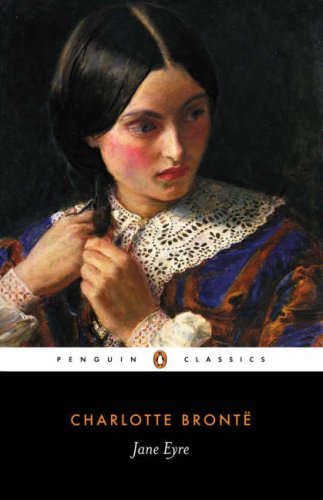
Jane Eyre


I know some of you other peeps are reading this too, since it's our book club book, so feel free to add in your own thoughts. And if you're not done, I won't spoil it!

I was somewhat familiar with Jane Eyre already. I skimmed through it in high school, but basically remembered nothing except that a girl was a governess in a big house, and there was something mysterious. So yeah.

I also recently watched a movie version of it, about 5 months ago, with my mom and my grandma. And I actually kind of liked having recently seen the movie, because I had a framework for the story. Sometimes stories from this era of writing can get lost in descriptions and things, so it helps to already know the storyline.

The point is--Jane Eyre is about an oprhan girl who grows up with her aunt and cousins, who are awful. They do NOT treat her like part of the family. Then she goes away to school, which isn't much better, but at lest she finds people there who are kind to her.

Fast forward to when she's 18, and she takes a position as a governess for a little French girl in a big spooky manor house called Thornfield Hall. And THAT, my friends, is where things get interesting. (Well, it was interesting before that too, but you know.) Anyway, the master of the house, Mr. Rochester, is a fascinating fellow, and . . . . read it!

I LOVED this book. The details left out of the movie are shocking to me now that I've read the book. I hope the new movie coming out leaves more in than the version I saw. I love Jane, I love Mr. Rochester, I love the weirdness of the story, I love the twist at the end--no way you could ever see that coming. It's beautiful. And even though I said before that sometimes these novels get too caught up in descriptions and things, I actually don't think Jane Eyre is too much like that. It moves pretty well. There are of course lots of words I don't know, but in context I always still know what's going on. I really, really, enjoyed it. Probably more than any other "Classics" I've read.

Tuesday, March 8, 2011

The No. 1 Ladies' Detective Agency


My ward book club is doing this book, and I'm so glad they are! I just finished it this morning as I walked to work, and I really liked it a lot.

It's about a woman named Precious Ramotswe, who opens up a detective agency with the money she inherits from her father when he dies. It is set in Botswana. And it is really just a charming, adorable, fun book. It would be a perfect book to read while you're traveling, it goes quickly and easily, and pretty much every chapter is one of her capers, like Anne of Green Gables.

I read the Poisonwood Bible last year, and it made me want to read another book set in Africa, so this one was great. I know I'm being like a stupid American and that Africa is HUGE, and that Congo and Botswana are different countries. But I liked reading a book set in Africa that wasn't sad. This isn't. They talk about some social problems of their country, but they also talk a lot about loving Africa, and Mama Ramotswe actually says at one part  . . . actually, I'll just re-type it, because it was so good.

"Mma Ramotswe did not want Africa to change. She did not want her people to become like everybody else, soulless, selfish, forgetful of what it means to be an African, or, worse still, ashamed of Africa. She would not be anything but an African, never, even if somebody came up to her and said 'Here is a pill, the very latest thing. Take it and it will make you into an American.' She would say no. Never. No thank you."

It's filled with little nuggets like that, about the land and loving Africa, and I really loved that part of it.

Not to mention how much I love Mma Ramotswe. She's kind of feminist, and gets offended when people laugh at her for being a lady detective. And she's fat. They say all the time that she's a fat lady, and I love it. There are too many books where the main character is "awkward and stick straight," and they try to act like it's so dumb to be really skinny. So it was nice to read a book where people greet her by saying, "/hey! Fat lady!" She's just a really great character, and I really liked the book a lot.

I felt like I had heard of this book a lot, and in Googling it to find the picture above, I realized that's probably because there are 11 books in this series! I had no idea it even WAS a series! This is the first one. There was also an HBO show, but it only has 8 episodes. Which is too bad, I think I would have liked watching it. And they filmed in Botswana, which I thought was cool.

Anyway, it was a great book. I wouldn't say you must drop everything you're reading to get this, but I really enjoyed it and thought it was very charming.

Thursday, February 3, 2011

Unbroken


I don't know if this is cheating or not, since I'm not even done with the book, but I just need to rave about Unbroken, by Laura Hillenbrand.

Laura Hillenbrand is the author of Seabiscuit, and while this has nothing to do with the book, it's an interesting sidenote--she has chronic fatigue disorder. Which, if you're like me, always seems sort of fake, but I read an amazing article about her and how she didn't leave her house for like 2 years because she was so tired, and it takes her an entire day just to write a few emails or write a few pages of a book. And both Seabiscuit and this book are about animals or people who are moving fast, so I think it's really interesting that she is so physically afflicted.

Anyway. Unbroken is about Louie Zamperini, who was an Olympic runner and WWII veteran. I am only a little more than halfway through this book, and it is already one of the most incredible books I've ever read.

I guess Laura Hillenbrand heard about Louie when she was researching Seabiscuit, because their names always showed up together in the Sports section. SO she decided to write a book about him.

It talks about his early life as a kid and teenager, and you will just fall in love with him, he's very mischievous and always running away from people so he wouldn't get in trouble. Eventually he channeled that into running REALLY fast, and broke every record in southern California, and went to the 1936 Olympics, where he did things like meet Hitler and steal a Nazi flag.

Then the war starts, he's in the Navy, and I don't want to give away too much, but his experiences are unbelievable and horrifying. He is adrift in the Pacific on a raft for over a month with no supplies, captured by the Japanese and struggles daily through a hellish POW camp, and . . . I'm not sure what happens next. That's where I am in the book. It is so, SO good. (And I know I always say that so I probably can't be trusted, but truly, this book is incredible.)

I just can't even believe what the human body, and more amazingly, the human spirit can endure. I have been shocked and amazed and completely inspired by nearly every chapter in this book. When I finish I'll let you know how even more amazed I am at this man.

Tuesday, December 28, 2010

All Souls


Well, as long as we're all reading books about cities, here's one!

I know that you know that I exaggerate ALL THE TIME, but here's the thing. This book is so good, and all of you should read it. It's one of the best books I've read in a long time.

My sister recommended it to me, she read it for one of her social work classes, and it really is so interesting and heartbreaking at the same time.

I know Katie will love it, because it's about Boston. Specifically, a neighborhood called Southie, and even more specifically the housing project Old Colony.

The guy who wrote the book grew up there, and this is the story of his family. Of the 11 children in his family, 4 died. And only one of them had an illness. In this neighborhood there are a lot of murders, suicides, and drug overdoses every year. Way too many teenagers die. 

It's an honest but not too painful depiction of growing up in an incredibly tough neighborhood. I was a little worried it would be really graphic and make me bawl my eyes out the whole time, but it wasn't and I didn't. I shed a few tears, of course, but it's not just some gut wrenching sob story. He loves his neighborhood, and even moved back there.

It's funny but also sad, it's quick moving, and everyone in it just comes alive. The best person in the book is his mother, always referred to as Ma. To give you a good example of the kind of lady she is, one night she got shot by a stray bullet while standing in the kitchen. It grazed her side, right under her armpit. She said there was no need to call 911 even though she was bleeding a lot, because she was going to go play her accordion at a pub (which she did regularly for extra cash). She changed into a black shirt so no one could see the blood, stuffed a bunch of toilet paper in her bra, and kept arguing and joking with EMTs about going to the hospital, telling her she'd only get in the ambulance if they'd drop her off at the pub. They finally made her get in the ambulance, but when they got to the hospital she hopped out the back and ran to the pub and bragged to all the Irish peeps about getting shot and not even seeing a doctor.

Another amazing chapter is about his 13 year old brother being charged with a murder he did not do, and all the corruption that happens in the system. It's pretty incredible and pretty awful.

Anyway, I can't imagine anyone reading this book and not enjoying it. I highly recommend it. I borrowed it from my sister and had it for a few days before I started it, and once I read it I kept thinking, "I can't believe I had this in my possession for any length of time without reading it." It's really really REALLY good.

P.S.
One disclaimer--if you don't want to read the F word, don't read this. It's set in the projects in Boston, so . . . yeah. I'ts not gratuitous, but it is there.

Thursday, October 7, 2010

The Glass Castle


Sorry to be a blog hog and post 2 days/books in a row, but I had to write about The Glass Castle.

I just finished it (like, 5 minutes ago), and I had to be sure all of you know that this is a must read. Casidy told me to read this book about a year ago, and I finally got around to reading it this week.

The very first chapter of the book has Jeannette telling how she was in the back of a taxi, headed to a party, when she saw her mother going through a dumpster, just another homeless lady in New York. She then told her driver to turn around and take her back to her apartment on Park Avenue.

She then goes back to the beginning and tells the story of her childhood, moving around all the time, mostly being practically homeless, her mom and dad never really having jobs, her dad as an alcoholic, etc. etc.

She has some truly amazing things happen in her life, this book is incredibly interesting. If you're like me, when you hear that someone wrote a "memoir," you're not really too interested, but this is a page turner. I really couldn't put it down. Like I said before, I made the mistake of starting this while I was still reading another book and had to force myself to finish the other one first.

One of the most remarkable things about this story is how she portrays her parents. She doesn't glamorize them at all, she tells it like it is, her mother's dramatic laziness, and her dad's alcoholism--but neither does she come across as bitter and angry, as many people would. She has an affection for them that the reader shares. By the end I would chuckle when her mom said something, thinking, "Oh, that is so like her." She really brought her family to life, and though you sympathize for their plight, you also kind of admire them. The thing I admired about her parents was their love of learning. They raised intelligent children because they had intelligent conversations about all sorts of things. There's a story in the book about how the mom was talking to someone else and mentioned Jackson Pollock, and the lady said, "I have Polish blood, so I don't appreciate you talking like that."

Mostly, they were pretty reprehensible parents, but the way she tells her life story made me love them too.

I give this a 5 out of 5 stars. I loved it.

Wednesday, October 6, 2010

Their Eyes Were Watching God


I just finished this book, and I feel like I should have liked it more than I did. Because I've heard about it for years, and I feel like people always said, "Oh, you HAVE to read it." And I liked it, but it's not a new favorite.

For one thing, the dialogue is written phonetically to reflect the people's speech (Black people living in Florida, so probably from the Carribbean), and it makes it hard to get through for me. It was like 200 pages long but took me over 2 weeks to read.

The thing I liked the most was Janie, the main character. She is exactly what a heroine in a book should be, in my opinion. She was strong and loving and hard-working. The love story between her and Tea Cake is very sweet and I really liked that.

Something I liked, that I'm sure was a big deal, was the prejudice displayed of lighter skinned Black people toward dark skinned people. This book was written in 1937, not exactly a time when talking openly about race was common. I read online just now (while verifying the publication date) that some of the Harlem Renaissance writers criticized Zora Neale Hurston for highlighting this aspect of African American life.

As I said, it was a good book, and I enjoyed it, but it's not a new favorite. I didn't ever feel completely wrapped up in it, I almost felt obligated to sit down and read it sometimes. I started The Glass Castle when I had about 60 pages left in Their Eyes Were Watching God, and I was way more into The Glass Castle. I had to make myself finish Their Eyes Were Watching God rather than get into The Glass Castle.

Anyone else have a different experience with this book? What do you have to say about it?

Wednesday, September 22, 2010

The Help


I LOVED this book. Some books take me a few pages or chapters to get into, and that was not the case with The Help. I was totally invested from beginning to end. The characters felt so real and wonderful to me.

The Help is set in Jackson, Mississippi in the early 1960s. I've read books before from that era, but this is a different perspective of the Civil Rights movement. Some of the chapters are from the perspective of "the help," two different black ladies, Minny and Aibileen, who are maids/cooks/baby-sitters in white ladies' houses, and some are from the perspective of a white girl, Skeeter, who just graduated from college and has come back home.

Skeeter decides to start a project collecting stories from the help in their town, to find out what it's REALLY like to be employed in a white person's house. So Minny and Aibileen get the ladies in town to tell Skeeter their stories.

If you haven't read this already, please do. I can't imagine anyone not loving it.

Ladies who have read it--what do you have to add? What did you love the most about this book?